


Germany’s Asylum Debate: Why Local Communities Still Feel Overwhelmed Despite Falling Numbers

Germany’s Asylum Debate: Why Local Communities Still Feel Overwhelmed Despite Falling Numbers
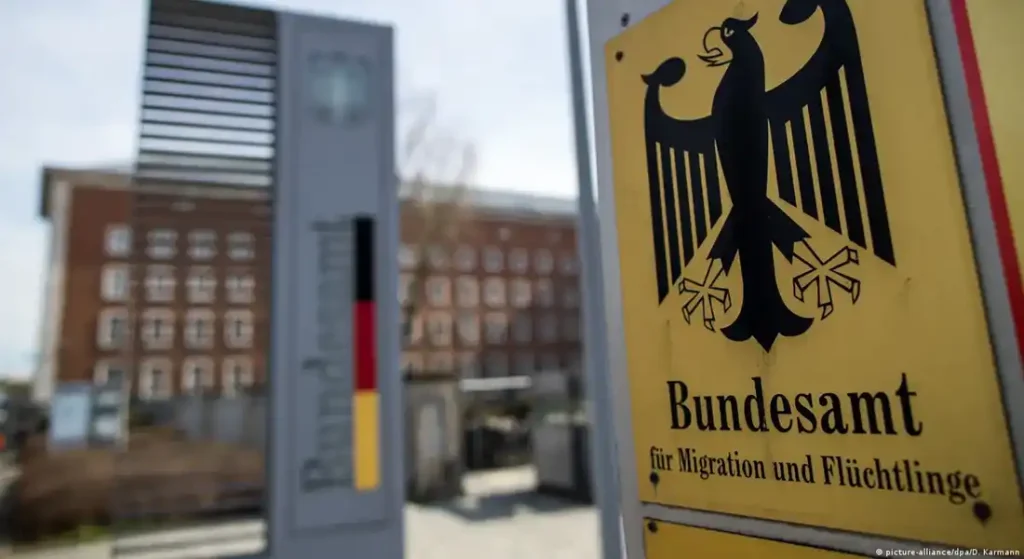
Over the past few years, asylum and migration have once again moved to the centre of Germany’s political debate, as if in recurring waves. Headlines speak of “overburdened municipalities”, “full shelters” and “rising tensions”, while official statistics at the same time show a noticeable decline in new asylum applications compared to recent peaks. This apparent contradiction between numbers and local realities is precisely what we explore behind the story.
According to official migration figures, Germany registered more than 329,000 first-time asylum applications in 2023, a sharp increase compared to the previous year. In 2024, however, the number dropped to roughly 230,000 first-time applications – about 30 percent less than in 2023 – and the downward trend continued in the first quarter of 2025 with a further year-on-year decline.
If overall numbers are falling, why do so many municipalities still complain about being at their limits?
The first part of the answer is simple: local capacity cannot be read off from national averages. Even if total arrivals decrease, some towns or small rural communities may experience a sudden increase relative to their size and infrastructure. A village receiving 200 extra people can feel much more overwhelmed than a big city receiving several thousand spread over many districts.
Second, the asylum issue does not start at Germany’s borders. The EU as a whole has been working for years to tighten control at its external borders and to reform the Common European Asylum System. The aim is to process applications faster, carry out more procedures at the borders or in first-entry states, and increase the options for returning those whose claims are rejected. These policies can influence the number and profile of people arriving in Germany, but they do not magically solve housing shortages or staff deficits in local administrations.
Third, local pressure is not only about new arrivals, but about everyone already living in the system:
- Recognised refugees looking for long-term housing in a market that is already in crisis,
- People whose asylum procedures are ongoing and often take months or years,
- Individuals with negative decisions who, for legal or humanitarian reasons, are not deported.
At the same time, municipalities face the same structural challenges for all residents: a lack of affordable flats, pressure on schools and childcare facilities, shortages of social workers and medical staff, and tight local budgets. Many mayors therefore feel they are caught in the middle: they have to implement federal and European decisions but receive fewer resources than they believe are necessary to manage their consequences on the ground.
“Behind the story”, there is also a struggle over political narratives. Some actors place almost every local problem – from housing shortages to social tensions – at the doorstep of asylum and migration. Others emphasise deeper structural factors: long-standing underinvestment, regional inequality, and a housing market that has been tight for years. For many residents, however, these complex debates are translated into concrete images: a sports hall converted into emergency accommodation, longer queues at the Bürgeramt, or the difficulty of finding a daycare place.
Asylum seekers themselves sit at the centre of this storm while often having little say: navigating slow bureaucratic procedures, political pressure and public suspicion, even though many simply see themselves as people seeking safety and a chance to rebuild their lives.
Thus, when one headline announces a “drop in asylum applications” while another reports that “municipalities are at breaking point”, this is not necessarily a contradiction. It reflects two different levels of reality:
- national statistics that show a downward trend,
- and local experiences in places where the margin of available housing, staff and budget has long been exhausted.
The task of responsible journalism is not to fuel fear or minimise problems, but to explain how European border policy, federal decisions, the housing market and municipal finances intersect in the everyday lives of people – those who have been here for generations and those who have just arrived.