


Fact Check: Will cash soon be abolished in Germany because of the digital euro?

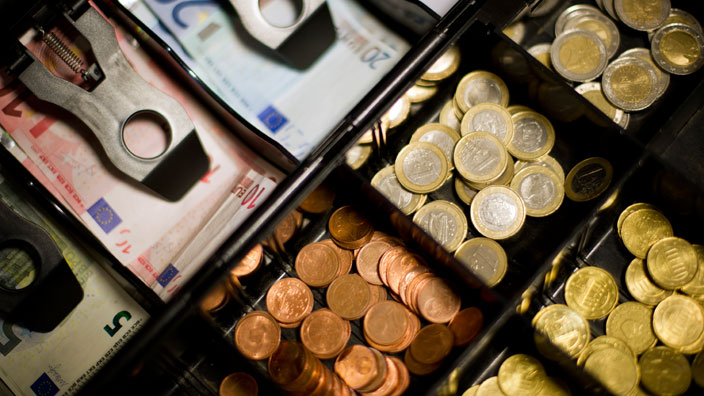
Fact Check: Will cash soon be abolished in Germany because of the digital euro?
Quick verdict:
The claim that “cash will be banned soon” is exaggerated and misleading.
The digital euro is indeed moving forward as a project of the European Central Bank, but EU institutions consistently describe it as a complement, not a replacement, for physical cash.
Where does the digital euro stand?
- The ECB has completed the investigation phase and is currently in a preparatory phase, with a pilot potentially starting around 2027 and a broader roll-out envisaged by 2029 if the legal framework is adopted.
- Officially, the digital euro aims to provide a state-backed digital means of payment, reduce dependence on foreign payment providers and maintain public money in an increasingly digital world.
In key statements, EU bodies stress that the digital euro is intended to coexist with cash, not eliminate it.
What about physical banknotes and coins?
- The German Bundesbank has repeatedly stated that it is not planning to abolish cash. It is even working on a new series of euro banknotes and investing in modern branches to handle cash logistics.
- It is true that cash usage has been declining as card and mobile payments expand, but this is a gradual behavioural change, not an imminent political ban on notes and coins.
Where does the “cash ban” narrative come from?
The rumour is fuelled by:
- Fears of total surveillance and “programmable money” that governments could theoretically freeze or redirect.
- Confusion between different international experiments and the specific design of the euro project.
However, ECB officials have explicitly said that the digital euro will not be “programmable money” issued with built-in restrictions by the central bank, and that people should be able to use it as freely as cash.
This does not mean there are no open questions – privacy, holding limits and the role of banks are all being hotly debated – but nothing in the current legislative process amounts to a decision to outlaw cash.
What does this mean for you in Germany?
- For the foreseeable future, you will still be able to pay with cash, with cards, and eventually with a digital euro if and when it is introduced.
- The key shift is not a sudden ban on banknotes, but a broader mix of payment options and more competition between public and private systems.
- The real questions are:
- How do we safeguard privacy in a deeply digital payments ecosystem?
- How do we protect vulnerable groups who rely heavily on cash?
- What legal guarantees will protect citizens’ freedom of choice?
Bottom line:
The digital euro is real, but a near-term “cash ban” in Germany is a rumour, not a policy.