


Kremlin Claims Ukraine Attacked Putin’s Residence with Drones, Kyiv Denies

Kremlin Claims Ukraine Attacked Putin’s Residence with Drones, Kyiv Denies
Reported from the source
Quick summary: The Kremlin claims Ukraine attacked a presidential residence in Russia’s Novgorod region with 91 long-range attack drones, aiming to undermine peace negotiations. Russian Foreign Minister Sergey Lavrov announced retaliation but no evidence was provided. Ukraine’s President Volodymyr Zelenskyy dismissed the accusation as “another round of lies” and a “complete fabrication” intended to justify further attacks and prolong the war. Experts and observers express skepticism due to a lack of evidence, inconsistencies in Russian reports, and the residence’s high security. The alleged incident has complicated recent peace talks, with Russia indicating a hardening of its negotiating position.
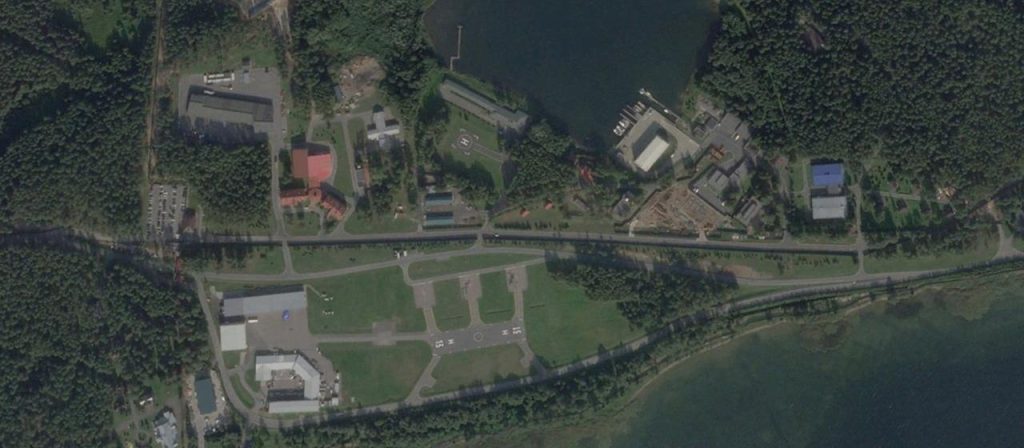
Russia’s Foreign Minister Sergey Lavrov accused Ukraine of attacking a presidential residence in the Novgorod region with 91 long-range attack drones overnight. He stated no one was injured and announced that Russia had identified targets for retaliation, though no evidence was published. Kremlin spokesman Dmitry Peskov said evidence was unnecessary as Russian air defense repelled the attack, and linked the alleged incident to Ukrainian President Volodymyr Zelenskyy’s Christmas address, suggesting Zelenskyy sought to kill Putin. Ukrainian President Zelenskyy swiftly responded, calling the claims “another round of lies” and a “complete fabrication.” He asserted that the accusations were designed to justify additional attacks on Ukraine and prolong the ongoing war. Ukrainian Foreign Minister Andriy Sybiha urged world leaders to condemn Russia, highlighting the absence of plausible evidence for the claims. The Valdai residence, also known as “Uzhin” or “Dolgije Borody,” is a heavily guarded complex in the Novgorod region, between Moscow and St. Petersburg. Putin’s whereabouts at the time of the alleged attack remain unclear, though he had meetings in the Kremlin on Saturday and Monday. Experts and observers are skeptical. Russia has not presented any evidence, instead referring to US intelligence services to analyze satellite images. Military expert Erich Schmidt-Eenboom noted that while satellite images could detect drones, they wouldn’t confirm their launch origin. ARD correspondent Judith Schacht suggested that while such an attack by Ukraine is technically possible, it would be “not sensible” given the residence’s strong security. The Russian internet platform Sota reported that local residents heard no anti-aircraft fire, and the US Institute for the Study of War (ISW) noted a lack of typical internet reports of debris or fires, stating the circumstances “do not correspond to the observed pattern of evidence when Ukrainian forces conduct attacks on Russia.” US President Donald Trump was informed by Putin about the incident and expressed anger, stating, “It’s one thing to be offensive. It’s another thing to attack his house.” Trump did not publicly question the credibility of the Kremlin’s claim. The Russian Ministry of Defense’s account of the drone incident changed. Initially, it reported 89 Ukrainian drones intercepted over various regions, including 18 over Novgorod. Following Lavrov’s statement, the ministry updated its report to 91 drones shot down en route to the presidential residence, specifying 49 over Bryansk, 41 over Novgorod, and one over Smolensk. This is not the first such accusation; Russia previously accused Ukraine in 2023 of attempting to assassinate Putin via a drone attack on the Kremlin, which Ukraine denied. The unsubstantiated accusations are expected to significantly complicate recent peace talks. Zelenskyy and Trump had reportedly made progress on a 20-point peace plan. However, Kremlin spokesman Peskov stated that while Moscow would not break off talks, its negotiating position would now be reviewed and hardened. European and Canadian leaders have held consultations, with Chancellor Friedrich Merz calling for “transparency and honesty from everyone – including Russia.” EU Commission President Ursula von der Leyen reported a “good discussion” on supporting Ukraine.
Source: www.tagesschau.de