


Navigating the Electric Vehicle Landscape: Mitigating China’s Export Surge in Europe’s Southern Neighbourhood

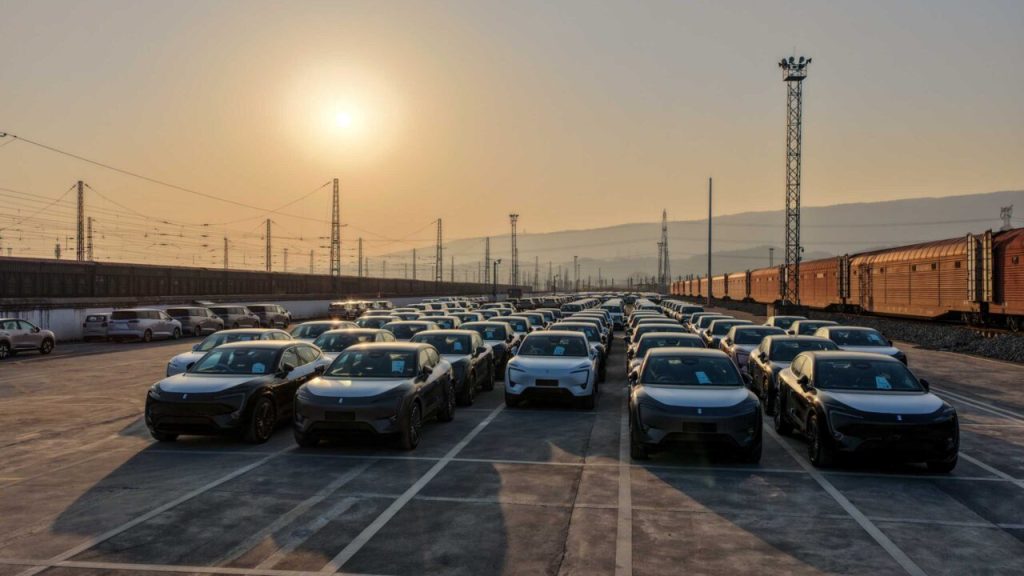
Navigating the Electric Vehicle Landscape: Mitigating China’s Export Surge in Europe’s Southern Neighbourhood
Executive Summary
This paper examines the implications of China’s burgeoning electric vehicle (EV) industry on Europe’s automotive sector, particularly in the context of the Middle East and North Africa (MENA). As China strategically invests in these regions, it poses significant challenges to European competitiveness and exacerbates dependencies within supply chains critical to the green transition. The analysis underscores the necessity for the European Union (EU) and its member states to adopt coherent trade and industrial policies that align with the objectives of the Pact for the Mediterranean, thereby fostering collaboration with regional partners to mitigate the risks of tariff circumvention and enhance the resilience of European car manufacturers.
Context & Background
The electric vehicle market is undergoing a transformative shift, driven by a global transition towards sustainable transportation. In this context, China has emerged as a dominant player, controlling a substantial share of the global EV supply chain, including battery production and raw material refinement. By 2025, projections indicate that 70% of EVs produced globally will originate from China, which poses a significant threat to Europe’s automotive industry. The EU’s response has included the imposition of tariffs on Chinese EV imports and the introduction of subsidies for domestic production. However, these measures may inadvertently push China to strengthen its foothold in emerging markets, particularly in the MENA region, where governments are keen to attract foreign investment to bolster their industrial capabilities and green agendas.
The geopolitical landscape further complicates the situation, as the ongoing US-Israeli conflict with Iran accelerates the shift towards electrified transport. The MENA region, with its proximity to Europe, presents an attractive opportunity for Chinese manufacturers to circumvent Western tariffs while simultaneously establishing a presence in developing markets. This dynamic not only threatens Europe’s competitiveness but also risks diminishing its geoeconomic influence in the southern neighbourhood, undermining the objectives of the EU’s Pact for the Mediterranean, which aims to enhance cooperation and support green transitions in the region.
Deep Analysis
The legal dimensions of this evolving landscape are critical, as the EU grapples with the implications of its trade policies in the context of China’s strategic maneuvers. The imposition of tariffs on Chinese EVs is a response to perceived market distortions caused by state subsidies, yet the effectiveness of these measures is contingent upon the EU’s ability to enforce compliance and prevent circumvention. The challenge lies in balancing protective measures for European manufacturers with the need to foster collaboration with MENA countries, which may view such tariffs as barriers to investment. A coherent legal framework that aligns trade policies with broader geopolitical objectives is essential to navigate this complex terrain.
Socially, the ramifications of China’s export surge extend beyond economic competition; they encompass issues of employment and technological advancement within the EU. The automotive sector is a cornerstone of European industry, employing millions and driving innovation. As Chinese EVs gain market share, European car manufacturers face pressure to adapt or risk obsolescence. This transition necessitates not only investment in new technologies but also a commitment to workforce retraining and upskilling to ensure that European workers remain competitive in a rapidly evolving market. The social contract between governments, industries, and workers must be reinforced to mitigate the potential fallout of increased competition from Chinese manufacturers.
Politically, the EU’s response to China’s EV strategy is fraught with challenges, particularly given the divergent interests of member states. The imposition of tariffs has sparked debate within the EU, with countries like Germany and Spain expressing concerns over potential repercussions for their automotive sectors. This division underscores the need for a unified approach that transcends national interests and prioritizes collective European competitiveness. The EU must leverage its diplomatic channels to foster collaboration with MENA countries, positioning itself as a partner in the green transition rather than a competitor. This requires a strategic alignment of trade, industrial, and neighbourhood policies to create a cohesive framework that supports both European manufacturers and regional partners.
In light of these complexities, the EU’s de-risking strategy must evolve to encompass not only protective measures but also proactive engagement with MENA countries. By fostering partnerships that facilitate technology transfer and investment in local manufacturing capabilities, Europe can mitigate the risks associated with dependency on Chinese supply chains. This approach aligns with the objectives of the Pact for the Mediterranean, which seeks to enhance cooperation and support sustainable development in the region. Ultimately, the EU must navigate the delicate balance between competition and collaboration to ensure the long-term viability of its automotive sector and its geopolitical influence in the southern neighbourhood.
Recommendations
- Align trade and industrial policies with the objectives of the Pact for the Mediterranean.
- Foster partnerships with MENA countries to develop a collaborative EV and clean-tech ecosystem.
- Implement a coherent legal framework to prevent tariff circumvention while supporting regional economic development.
- Invest in workforce retraining and upskilling to enhance competitiveness in the evolving automotive market.
- Encourage technology transfer and local manufacturing capabilities in MENA to reduce dependency on Chinese supply chains.
Conclusion
In conclusion, the surge of Chinese electric vehicles in Europe’s southern neighbourhood presents both challenges and opportunities for the EU. By adopting a comprehensive and coherent approach that integrates trade, industrial, and neighbourhood policies, Europe can enhance its competitiveness while fostering sustainable development in the MENA region. This strategic alignment is essential to mitigate the risks posed by China’s export surge and to ensure that Europe remains a key player in the global automotive landscape.