


Australia’s Economy Surges Amid Defence Committee Row and Excise Debates

Australia’s Economy Surges Amid Defence Committee Row and Excise Debates
Reported from the source
Quick summary: Australia’s economy experienced strong growth in late 2025, though the RBA warns of inflation risks. Politically, a new “secret” defence committee sparked controversy, while the Treasurer fact-checked a shadow minister’s fuel excise claim. Other key issues included rising black market tobacco due to high excise, criticism of the government’s Middle East evacuation efforts, and a NSW Premier admitting a “strained” relationship with the Muslim community.
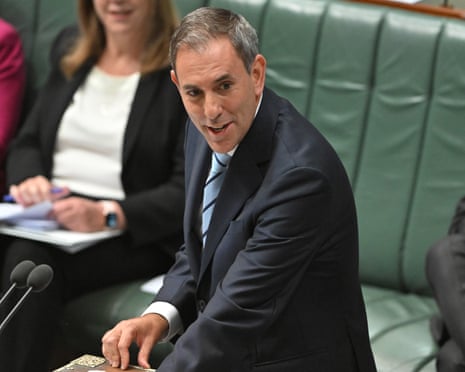
Australia’s economy grew by 0.8% in the December quarter of 2025, pushing the annual growth rate to 2.6%. Treasurer Jim Chalmers stated this growth was stronger than any major advanced economy, providing a robust foundation against global volatility, particularly amid escalating Middle East hostilities. Private demand saw increased growth, with defence spending being a significant driver of public demand. However, the Reserve Bank of Australia (RBA) expressed concerns that the economy might be operating beyond its capacity, potentially leading to increased inflationary pressures. RBA Governor Michele Bullock warned of a “live” chance of an interest rate hike later in the month. A bill passed the Senate to establish a new “secret” defence committee, exclusively comprising Labor and Coalition members, to deliberate on the Aukus agreement and Australia’s involvement in military conflicts. The Greens, excluded from this committee, criticized it as being composed of “pro-Trump, pro-Aukus and pro-war” members who would not challenge government policy, arguing it would make defence policy behind closed doors. Separately, Treasurer Jim Chalmers’ office fact-checked Shadow Treasurer Tim Wilson’s assertion that the government collects more money from fuel excise as petrol prices rise. Chalmers clarified that the fuel excise is a fixed amount per litre (52.6 cents), adjusted for inflation every six months, and does not increase simply because petrol prices go up. Australia’s tobacco excise increased by another 2%, contributing to concerns that high taxes are inadvertently fueling a black market for cigarettes, which now reportedly accounts for about half of all tobacco consumed and results in billions in lost government revenue. Nationals leader David Littleproud acknowledged a general decline in voter support for political parties, stating that “every seat’s becoming vulnerable.” In foreign policy, Nationals Senator Matt Canavan voiced opposition to strikes on Iran, questioning the US administration’s shifting justifications and the historical efficacy of “regime change wars.” The Coalition criticized the Labor government for its perceived slow response in assisting Australians in the Middle East, highlighting a delay in issuing “do not travel” warnings and evacuating the general public compared to diplomats. In New South Wales, Premier Chris Minns admitted a “strained” relationship with the state’s Muslim community following the cancellation of the annual Iftar dinner amidst tensions from protests against an Israeli president’s visit, an incident where police aggressively moved on praying individuals, for which the police commissioner later apologized.
Source: www.theguardian.com