


Legal and Humanitarian Implications of Polish Law Restricting Asylum Rights at Borders: A Critical Analysis

Legal and Humanitarian Implications of Polish Law Restricting Asylum Rights at Borders: A Critical Analysis
Executive Summary
This paper critically examines the recent amendments to Polish law that restrict the right to asylum at the borders, particularly in the context of the ongoing geopolitical tensions with Belarus and Russia. The analysis highlights the legal, social, and political dimensions of these changes, emphasizing the implications for human rights and international obligations. The findings suggest that while the Polish government justifies these measures as necessary for national security, they raise significant concerns regarding compliance with international human rights standards, particularly the principle of non-refoulement. The paper concludes with recommendations for policy reforms aimed at balancing national security interests with humanitarian obligations.
Context & Background
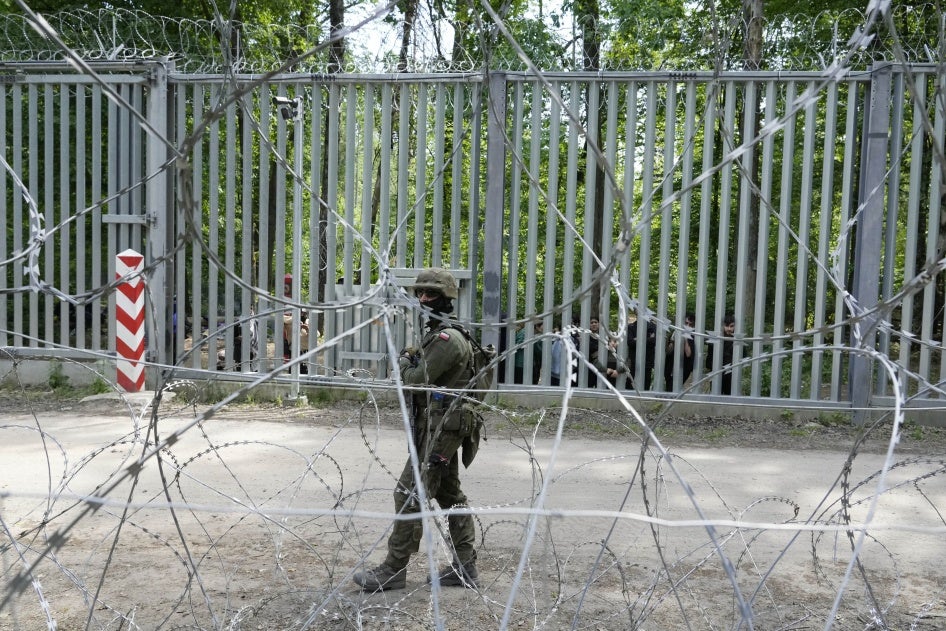
Since July 2021, Poland has faced a significant influx of migrants at its border with Belarus, which has been characterized by allegations of instrumentalisation by the Belarusian government. This situation escalated following the 2020 presidential election in Belarus, leading to increased tensions and violence at the border. The Polish Border Guard has reported numerous instances of violence against its officers, as well as organized attempts by migrants to cross the border illegally. In response to these challenges, Poland has implemented a series of legal measures, including the introduction of a buffer zone and the suspension of asylum rights, which have drawn widespread criticism from human rights organizations and international bodies.
The legal framework governing asylum in Poland has undergone significant changes, particularly with the amendment to the Act on Granting Protection to Foreigners in February 2025. This amendment allows for the temporary restriction of the right to apply for international protection under specific circumstances, particularly in the context of perceived threats to national security. While the Polish government argues that these measures are necessary to protect its borders, they have raised serious concerns regarding compliance with international human rights obligations, including the principle of non-refoulement, which prohibits the return of individuals to countries where they may face persecution or serious harm.
Deep Analysis
The legal implications of the recent amendments to Polish asylum law are profound. The introduction of provisions allowing for the temporary restriction of asylum applications raises questions about the compatibility of these measures with Poland’s obligations under international law. The principle of non-refoulement, enshrined in the 1951 Refugee Convention and other human rights treaties, mandates that states must not return individuals to countries where they face a real risk of persecution or harm. The new Polish law, which permits the dismissal of asylum applications based on the notion of ‘instrumentalisation,’ appears to contravene this principle by allowing for the rejection of applications from individuals who may be fleeing violence or persecution.
Moreover, the vagueness surrounding the term ‘immediately’ in the context of asylum applications further complicates the legal landscape. The potential for arbitrary interpretation of this term could lead to situations where individuals are denied access to asylum procedures after having spent significant time in precarious conditions, undermining their right to seek protection. This lack of clarity not only poses legal challenges but also raises ethical concerns about the treatment of vulnerable populations seeking refuge.
From a social perspective, the implications of these legal changes are equally concerning. The introduction of a buffer zone and the reported push-back practices at the border have resulted in a humanitarian crisis, with numerous reports of migrants facing violence, injury, and even death while attempting to cross into Poland. The Helsinki Foundation for Human Rights has documented a troubling trend of deaths at the border, highlighting the urgent need for a humane response to migration that prioritizes the safety and dignity of individuals. The Polish government’s approach, characterized by a focus on border security, risks exacerbating the suffering of those in need of protection and undermines Poland’s reputation as a country committed to upholding human rights.
Politically, the amendments to asylum law reflect broader trends in European migration policy, where national security concerns often take precedence over humanitarian considerations. The Polish government’s actions can be viewed within the context of rising populism and anti-immigrant sentiment across Europe, which has led to increasingly restrictive asylum policies. This shift not only affects Poland but also has implications for the European Union as a whole, as member states grapple with the challenges posed by migration and the need for a cohesive and humane response. The ongoing legal cases before the European Court of Human Rights, including *R.A. and others v. Poland*, will be pivotal in determining the future of asylum rights in the region and may set important precedents for the protection of migrants in similar situations.
Methodology
This analysis is based on a review of primary policy documents.
Anchor Source: eumigrationlawblog.eu
Recommendations
- Reinstate the right to asylum at border crossings in accordance with international human rights obligations.
- Clarify the legal definition of ‘immediate’ in the context of asylum applications to prevent arbitrary interpretations.
- Implement training programs for border officials on human rights standards and the treatment of asylum seekers.
- Enhance cooperation with international organizations, such as UNHCR, to ensure compliance with international protection standards.
- Establish transparent monitoring mechanisms to assess the impact of border policies on migrant rights and safety.
Conclusion
In conclusion, the recent amendments to Polish law restricting the right to asylum at borders raise significant legal, social, and political concerns. While the Polish government cites national security as a justification for these measures, the implications for human rights and compliance with international obligations cannot be overlooked. A balanced approach that prioritizes both national security and the protection of vulnerable populations is essential for upholding Poland’s commitment to human rights and maintaining its standing within the European Union.