


Macron Unveils Major Shift in France’s Nuclear Deterrence Strategy

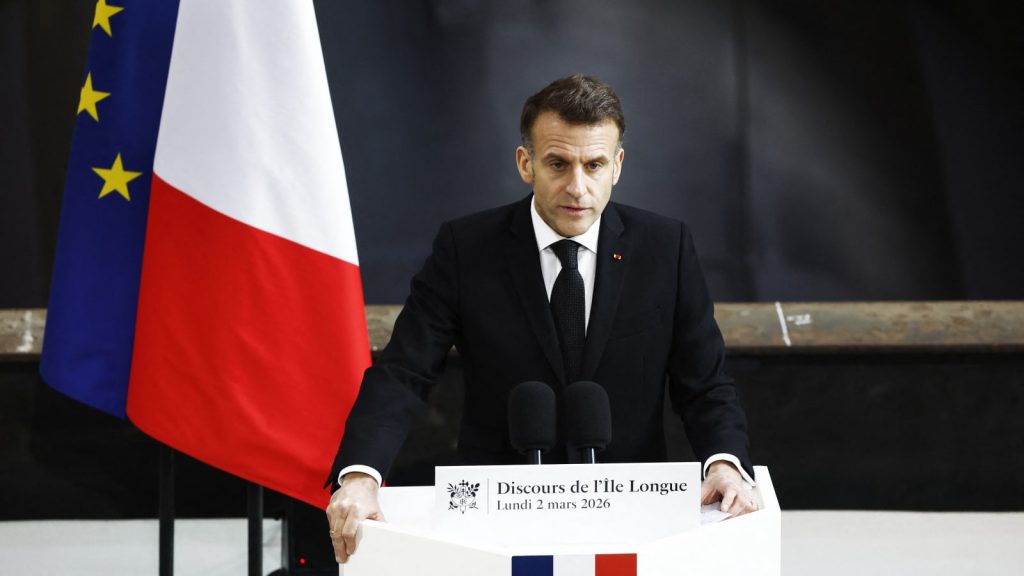
Macron Unveils Major Shift in France’s Nuclear Deterrence Strategy
Reported from the source
Quick summary: French President Emmanuel Macron delivered a landmark speech outlining a significant pivot in France’s nuclear deterrence strategy, introducing a new “forward deterrence” doctrine. Deemed the most significant update in 30 years, this strategy includes increasing nuclear warheads, ceasing public disclosure of arsenal figures, and offering enhanced cooperation with European allies. This cooperation involves potential participation in exercises of France’s air-launched nuclear capacity and the stationing of French nuclear bombers at allied air bases, while maintaining France’s independent decision-making on the use of force.
During a speech from a naval base in Brittany, French President Emmanuel Macron detailed a new “forward deterrence” doctrine, marking what experts call the most significant update to French nuclear deterrence policy in three decades. France, one of Europe’s two nuclear powers, operates a system entirely independent of the U.S. Macron announced that France would increase its number of nuclear warheads and cease disclosing figures for its nuclear arsenal. He proposed greater cooperation with European allies, including Germany, Poland, the Netherlands, Belgium, Greece, Sweden, and Denmark, who could participate in exercises of France’s air-launched nuclear capacity. French nuclear bombers could also be stationed at their air bases. Macron emphasized that the decision to use force “belongs solely to the President of the Republic,” rejecting explicit “guarantees” to partner countries, though he stated the adapted doctrine is “perfectly complementary to that of NATO.” The shift comes amid increasing global instability, with Macron citing the war in Ukraine, the threat from Russia, China, changing U.S. defense priorities, and escalating conflict in the Middle East, including Iran’s nuclear and ballistic capabilities. He stated, “The world is becoming more difficult… We must strengthen our nuclear deterrent in the face of the combination of threats.” Experts largely viewed the speech as significant. Bruno Tertrais, deputy director of the Foundation for Strategic Research, called it the “most significant update to French nuclear deterrence policy in 30 years.” Ankit Panda of the Carnegie Endowment for International Peace described it as “remarkable,” meeting the moment of a “new nuclear age in Europe.” While some allies, particularly Germany, might have pushed for more joint decision-making, this was not on the table, according to Darya Dolzikova of RUSI. Yannick Pincé of Université Sorbonne Nouvelle noted the speech’s political timing ahead of next year’s presidential election, aiming to announce measures difficult to reverse. France and Germany have already pledged “concrete steps this year,” including German participation in French nuclear exercises. Macron addressed financing concerns by stating allies would handle non-nuclear aspects of the new system, a “way of sharing the burden” without compromising French decision-making on nuclear weapons. Domestic criticism has been limited, with National Rally leaders supporting France’s strategic role and exclusive control over its ultimate decision-making.
Source: www.cnbc.com