


Navigating the EV Endgame: Mitigating China’s Export Surge in Europe’s Southern Neighbourhood

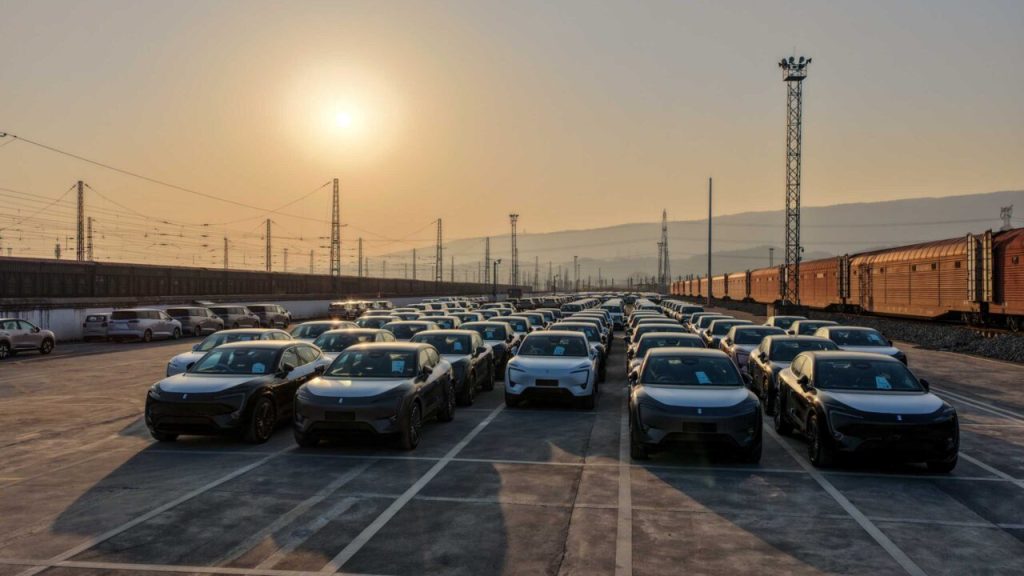
Navigating the EV Endgame: Mitigating China’s Export Surge in Europe’s Southern Neighbourhood
Executive Summary
This paper examines the implications of China’s burgeoning electric vehicle (EV) industry on Europe’s automotive sector, particularly in the context of the Middle East and North Africa (MENA). As China capitalizes on its dominance in the EV supply chain and seeks to expand its market share in emerging regions, Europe faces significant challenges in maintaining its industrial competitiveness and geopolitical influence. The analysis underscores the necessity for the European Union (EU) to align its trade, industrial, and neighbourhood policies to effectively counteract China’s strategic maneuvers while fostering regional partnerships that support economic development and green transitions in MENA.
Context & Background
The global shift towards electric vehicles has accelerated in response to geopolitical tensions and the volatility of fossil fuel markets. China has emerged as a formidable player in this transition, controlling a substantial portion of the EV supply chain, including battery production and raw material refinement. By 2025, it is projected that 70% of global EV production will originate from China, posing a direct challenge to European automotive manufacturers. This scenario is exacerbated by China’s strategic investments in the MENA region, where it seeks to establish footholds that not only bypass Western tariffs but also enhance its influence in a geopolitically significant area adjacent to Europe. The EU’s response has been characterized by a ‘de-risking’ approach, which includes imposing tariffs on Chinese EV imports and incentivizing local production. However, the effectiveness of these measures is called into question as China adapts its strategies to circumvent such barriers and solidify its market presence in developing countries.
The EU’s ‘Pact for the Mediterranean’ aims to enhance cooperation with southern neighbours, promoting green transitions and economic development. However, the increasing Chinese presence in MENA threatens to undermine these objectives, as countries in the region may gravitate towards Chinese investments that promise immediate economic benefits. The challenge for Europe lies not only in protecting its automotive sector but also in ensuring that its policies do not inadvertently alienate potential partners in MENA. A coherent strategy that integrates trade, industrial, and neighbourhood policies is essential for Europe to maintain its competitive edge and geopolitical relevance in the face of China’s expanding influence.
Deep Analysis
The legal dimensions of this evolving dynamic are complex, particularly concerning international trade regulations and tariff structures. The EU’s imposition of tariffs on Chinese EVs in 2024 was a significant step towards protecting its automotive industry; however, these measures have sparked debates about their legality under World Trade Organization (WTO) rules. The differentiation of tariffs based on the level of state support received by Chinese manufacturers reflects an attempt to address market distortions, yet it raises questions about the potential for retaliatory measures from Beijing. Furthermore, the EU’s legal framework must evolve to address the challenges posed by China’s state-led industrial policies, which often operate outside conventional market principles. This necessitates a robust legal strategy that not only defends against unfair competition but also promotes fair trade practices in the global automotive market.
Socially, the implications of China’s EV strategy extend beyond economic competition; they touch upon issues of employment, technological advancement, and environmental sustainability. The automotive sector is a critical source of employment in Europe, and the transition to electric mobility presents both opportunities and challenges for workers. As European manufacturers strive to innovate and compete with Chinese firms, there is a pressing need for policies that support workforce retraining and upskilling. Additionally, the environmental benefits of transitioning to EVs must be weighed against the potential social costs of job losses in traditional automotive sectors. Policymakers must therefore adopt a holistic approach that considers the social ramifications of their decisions, ensuring that the green transition is inclusive and equitable.
Politically, the EU’s response to China’s export surge in the automotive sector is fraught with challenges. The internal divisions within the EU, particularly among member states with varying degrees of reliance on the Chinese market, complicate the formulation of a unified strategy. Countries like Germany, with significant automotive interests in China, may resist stringent measures that could jeopardize their economic ties. Conversely, nations like Spain, which are wary of losing investment opportunities, may advocate for a more conciliatory approach. This divergence highlights the need for a cohesive political strategy that balances national interests with collective EU objectives. Engaging with MENA countries as partners in a broader clean-tech ecosystem could serve as a diplomatic avenue to mitigate the competitive pressures from China while fostering regional stability and cooperation.
Recommendations
- Enhance collaboration with MENA countries to develop a joint EV and clean-tech ecosystem.
- Align trade, industrial, and neighbourhood policies to create a coherent strategy against China’s market dominance.
- Implement workforce retraining programs to support workers transitioning from traditional automotive roles to EV manufacturing.
- Strengthen legal frameworks to address unfair competition and promote fair trade practices in the automotive sector.
- Encourage investment in local EV production and supply chains to reduce dependency on Chinese imports.
Conclusion
In conclusion, the rise of China’s electric vehicle industry presents both challenges and opportunities for Europe, particularly in the context of its southern neighbourhood. To navigate this complex landscape, the EU must adopt a multifaceted approach that integrates legal, social, and political dimensions into its policy framework. By fostering regional partnerships and aligning its strategies, Europe can not only safeguard its automotive sector but also enhance its geopolitical influence in the MENA region, ensuring a sustainable and competitive future in the global EV market.