


Oil Prices Tumble on Trump’s ‘War Over Soon’ Claim Amid Escalating Tensions and New Iranian Leader

Oil Prices Tumble on Trump’s ‘War Over Soon’ Claim Amid Escalating Tensions and New Iranian Leader
Reported from the source
Quick summary: Global oil prices fell sharply after US President Donald Trump suggested the US-Israel war on Iran could conclude “very soon.” This development coincides with the appointment of Mojtaba Khamenei as Iran’s new Supreme Leader. The conflict continues to escalate, marked by Israeli strikes on Iranian targets and controversy surrounding a US Tomahawk missile hitting an Iranian elementary school. Meanwhile, several members of the Iran women’s football team have received protection in Australia, and Australia is deploying military assets to the Gulf.
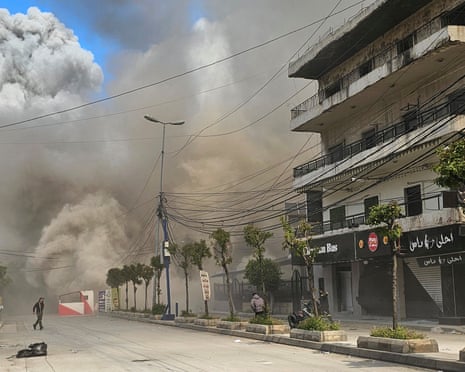
Brent crude, the international benchmark, tumbled to $98.96 per barrel, a sharp fall from its four-year high of $119.50 reached on Monday. The decline followed US President Donald Trump’s claim in a CBS News interview that the war on Iran was “very complete, pretty much” and would be over “very soon.” Trump also indicated a willingness to lift oil sanctions on “some countries” to ease prices, issuing a 30-day waiver for India to purchase Russian oil. However, he issued a severe warning, threatening to hit Iran “TWENTY TIMES HARDER” if it attempted to disrupt global energy supplies, particularly in the Strait of Hormuz, and to destroy targets making it “virtually impossible for Iran to ever be built back, as a Nation, again.” In response, Iran’s Revolutionary Guards declared they would not permit “one litre of oil” to be exported if US-Israeli attacks persisted, asserting their role in determining the war’s end. Amidst the conflict, Israel reported striking an Iranian missile launcher after a barrage from Iran triggered air raid warnings across several Israeli areas, though no casualties were reported. This action followed a “broad wave” of Israeli strikes on Tehran, with residents describing heavy bombardment, explosions, and power outages. A controversial incident involved a strike on an Iranian elementary school in Minab, which resulted in the deaths of numerous children. Video evidence and munitions experts suggest a US Tomahawk missile struck the school, located adjacent to an Islamic Revolutionary Guards (IRGC) naval compound. President Trump, without providing evidence, suggested Iran or “somebody else” was responsible, stating that “Tomahawks are used by others” and that he lacked sufficient information. In Iran, Mojtaba Khamenei has been appointed the new supreme leader following the deaths of his father, wife, son, and mother. Iranian politicians pledged loyalty, but public opinion was divided, with supporters viewing the appointment as a defiant act and opponents fearing it would quash hopes for change. Anti-government activity has remained low, with activists hesitant to protest while the country is under attack. Separately, five members of the Iran women’s football team, including captain Zahra Ghanbari, have been granted protection in Australia and offered training with an A-League club. Advocates are assisting other team members in understanding their asylum options, with expectations that more players and staff may seek to remain in Australia, despite the group being under surveillance by minders. Australia has also announced the deployment of an E-7A Wedgetail military surveillance plane to the Gulf at the request of the United Arab Emirates, alongside advanced medium-range air-to-air missiles. Prime Minister Anthony Albanese clarified that the deployment is defensive, aimed at supporting partners’ efforts to ensure safety, noting that the UAE has already intercepted over 1,500 drones and rockets.
Source: www.theguardian.com