


German Special Forces Gain Cross-Border Pursuit Powers

Daily Monitor
September 26, 2026
German Special Forces Gain Cross-Border Pursuit Powers
Germany and the Netherlands strengthen police cooperation to combat cross-border crime and terrorism.
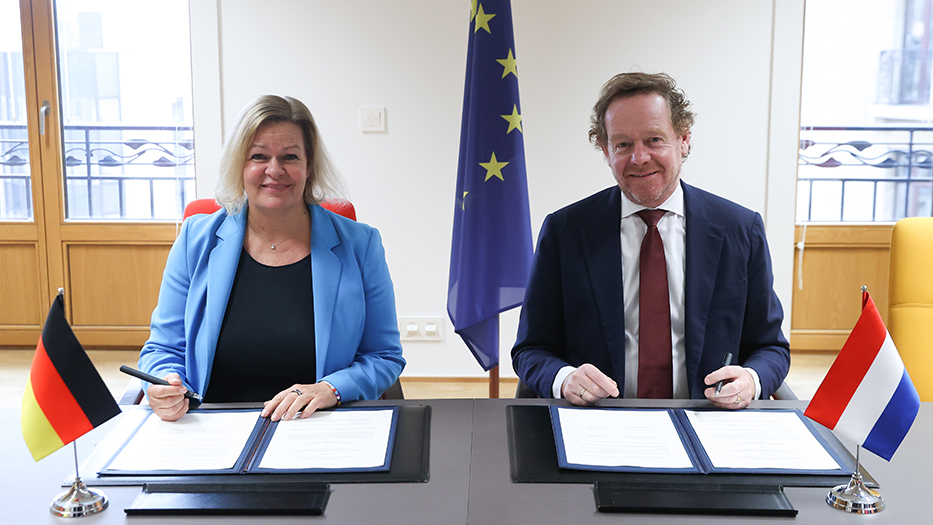
In a landmark development, Germany and the Netherlands have agreed to enhance their cross-border police collaboration, enabling German special forces to pursue criminals into Dutch territory. This agreement, formalized as an amendment to the 2005 Treaty of Enschede, marks a significant step in addressing the growing challenges posed by organized crime and terrorism that exploit national borders to evade justice.
The decision comes amidst a surge in cross-border criminal activities, particularly in western Germany, where attacks on cash machines have become alarmingly frequent. In 2022 alone, nearly 500 ATMs were targeted, with many perpetrators originating from the Netherlands. Such incidents have highlighted the limitations of existing police protocols and underscored the need for specialized cross-border operations.
Until now, German police officers could only pursue suspects across the border if caught in the act. However, this new agreement allows for the deployment of special forces in planned operations, such as apprehending high-risk criminals, conducting searches, and securing evidence. Dutch Justice and Security Minister David van Weel emphasized the importance of this measure, stating that it is crucial to prevent dangerous individuals from exploiting borders to escape law enforcement.
The collaboration also aims to tackle other pressing issues, including the smuggling of explosives from Eastern Europe into Germany and the Netherlands. These explosives, often used in ATM attacks, have been linked to organized crime networks. Additionally, the provinces bordering Germany and Belgium, such as Limburg, have become hotspots for drug trafficking, further necessitating enhanced cooperation.
The Treaty of Enschede will undergo a broader revision to adapt to modern challenges. Van Weel noted that the nature of crime has evolved significantly since the treaty’s inception, with online components and drug cartels now playing a major role. The updated agreement will also focus on improving information exchange and mutual assistance between the two nations.
This initiative aligns with existing collaborations within the Benelux Union, where the Netherlands has already deepened police cooperation with Belgium and Luxembourg. The German-Dutch partnership is expected to follow a similar model, fostering a united front against transnational crime. As Europe faces increasingly complex security threats, this bilateral effort underscores the importance of cross-border solidarity in safeguarding public safety.
The decision comes amidst a surge in cross-border criminal activities, particularly in western Germany, where attacks on cash machines have become alarmingly frequent. In 2022 alone, nearly 500 ATMs were targeted, with many perpetrators originating from the Netherlands. Such incidents have highlighted the limitations of existing police protocols and underscored the need for specialized cross-border operations.
Until now, German police officers could only pursue suspects across the border if caught in the act. However, this new agreement allows for the deployment of special forces in planned operations, such as apprehending high-risk criminals, conducting searches, and securing evidence. Dutch Justice and Security Minister David van Weel emphasized the importance of this measure, stating that it is crucial to prevent dangerous individuals from exploiting borders to escape law enforcement.
The collaboration also aims to tackle other pressing issues, including the smuggling of explosives from Eastern Europe into Germany and the Netherlands. These explosives, often used in ATM attacks, have been linked to organized crime networks. Additionally, the provinces bordering Germany and Belgium, such as Limburg, have become hotspots for drug trafficking, further necessitating enhanced cooperation.
The Treaty of Enschede will undergo a broader revision to adapt to modern challenges. Van Weel noted that the nature of crime has evolved significantly since the treaty’s inception, with online components and drug cartels now playing a major role. The updated agreement will also focus on improving information exchange and mutual assistance between the two nations.
This initiative aligns with existing collaborations within the Benelux Union, where the Netherlands has already deepened police cooperation with Belgium and Luxembourg. The German-Dutch partnership is expected to follow a similar model, fostering a united front against transnational crime. As Europe faces increasingly complex security threats, this bilateral effort underscores the importance of cross-border solidarity in safeguarding public safety.
Drafted & Edited by Investigative Desk | AboMatrix