


Protests Target AfD Party Congress in Erfurt

Daily Monitor
September 26, 2026
Protests Target AfD Party Congress in Erfurt
Germany braces for large-scale protests as opposition groups challenge the AfD’s controversial party congress.
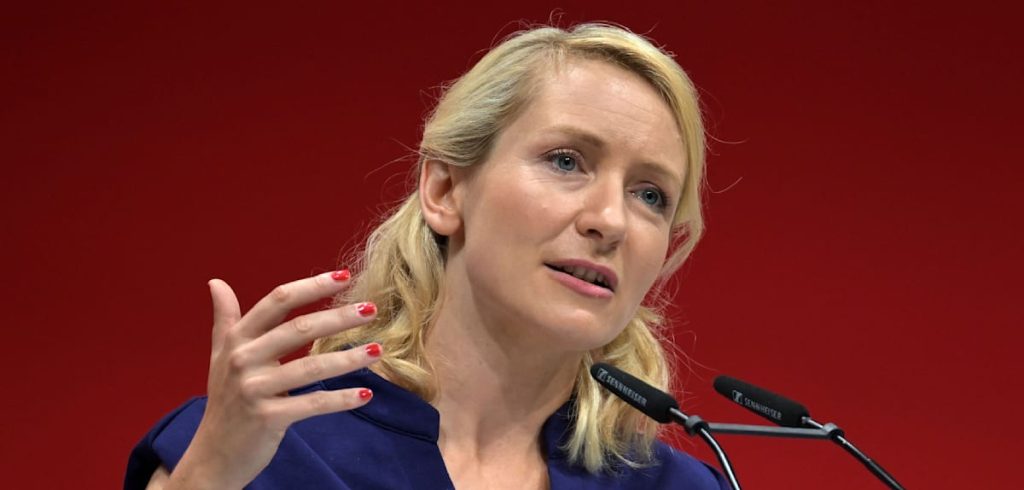
Germany is witnessing heightened political tensions as the far-right Alternative for Germany (AfD) party convenes its federal congress in Erfurt on July 4 and 5. The event has sparked widespread opposition, with leftist groups, unions, and political parties, including Die Linke and the Greens, calling for mass protests. Ines Schwerdtner, leader of Die Linke, has publicly defended the legitimacy of peaceful blockades, emphasizing their role in countering what she describes as ‘anti-democratic forces.’
Schwerdtner, speaking in Berlin, underscored the importance of nonviolent resistance, stating, ‘Blockades are an absolutely legitimate form of protest in the public sphere.’ She further argued that disrupting the congress would symbolize a significant victory against the AfD’s agenda, which she claims undermines democratic values. Schwerdtner also highlighted that political violence originates from the far-right, asserting that civil protests are not only justified but necessary.
The AfD congress has drawn sharp criticism from various quarters, with opponents accusing the party of fostering divisive rhetoric and policies. Meanwhile, security agencies are preparing for what they describe as a ‘major incident,’ anticipating between 35,000 and 50,000 demonstrators. According to internal police documents cited by WELT AM SONNTAG, authorities are also bracing for potential clashes, estimating up to 2,500 individuals with violent tendencies among the protesters.
Björn Höcke, the AfD’s regional leader in Thuringia, has warned of ‘civil war-like conditions,’ a sentiment echoed by AfD deputy faction leader Beatrix von Storch, who claimed on social media that the protests signal an impending societal breakdown. However, Thuringia’s Interior Minister Georg Maier (SPD) dismissed these assertions, stating there is no evidence to support such claims.
The protests against the AfD reflect broader societal divisions in Germany, where debates over immigration, nationalism, and democratic values continue to polarize public opinion. As Erfurt becomes the focal point of this ideological clash, the coming days will test the resilience of Germany’s democratic framework and its capacity to manage dissent without escalating tensions.
Schwerdtner, speaking in Berlin, underscored the importance of nonviolent resistance, stating, ‘Blockades are an absolutely legitimate form of protest in the public sphere.’ She further argued that disrupting the congress would symbolize a significant victory against the AfD’s agenda, which she claims undermines democratic values. Schwerdtner also highlighted that political violence originates from the far-right, asserting that civil protests are not only justified but necessary.
The AfD congress has drawn sharp criticism from various quarters, with opponents accusing the party of fostering divisive rhetoric and policies. Meanwhile, security agencies are preparing for what they describe as a ‘major incident,’ anticipating between 35,000 and 50,000 demonstrators. According to internal police documents cited by WELT AM SONNTAG, authorities are also bracing for potential clashes, estimating up to 2,500 individuals with violent tendencies among the protesters.
Björn Höcke, the AfD’s regional leader in Thuringia, has warned of ‘civil war-like conditions,’ a sentiment echoed by AfD deputy faction leader Beatrix von Storch, who claimed on social media that the protests signal an impending societal breakdown. However, Thuringia’s Interior Minister Georg Maier (SPD) dismissed these assertions, stating there is no evidence to support such claims.
The protests against the AfD reflect broader societal divisions in Germany, where debates over immigration, nationalism, and democratic values continue to polarize public opinion. As Erfurt becomes the focal point of this ideological clash, the coming days will test the resilience of Germany’s democratic framework and its capacity to manage dissent without escalating tensions.
Drafted & Edited by Investigative Desk | AboMatrix