


Jens Spahn’s Political Demise: Echoes of Thirty Years of CDU Fractures

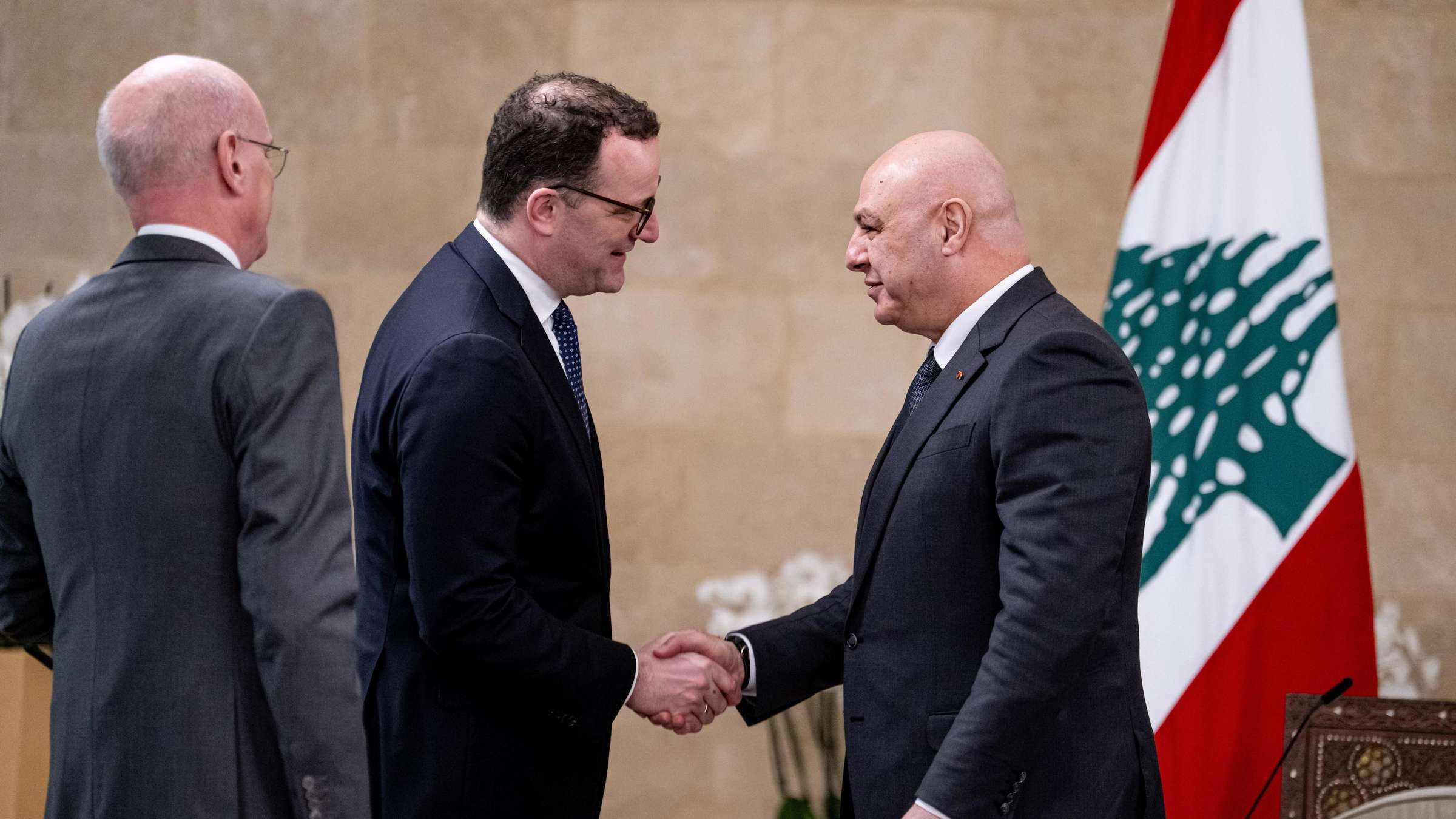
Jens Spahn’s Political Demise: Echoes of Thirty Years of CDU Fractures
Jens Spahn’s Political Demise: Echoes of Thirty Years of CDU Fractures
🔹 The Official Illusion:
Jens Spahn’s resignation from the Bundestag’s Budget Committee is portrayed as his response to personal controversies.
🛑 The Parallel Truth:
Jens Spahn’s resignation from the Budget Committee of the Bundestag extends far beyond personal indiscretions or the frustration of CDU colleagues. It is emblematic of the intricate fractures within the CDU—a cycle of internal disarray that repeats with precision, each time revealing deeper systemic scars. To understand Spahn’s fall, we must delve into historical layers of the CDU’s political genealogy and examine how the fragmentation of leadership within the party has reshaped its trajectory. Such episodes are not isolated; they borrow from precedents set by Wolfgang Schäuble’s challenges in the early 2000s, the Merkel years’ internal ideological debates, and even the series of leadership crises pre-dating German reunification. Spahn’s career trajectory mirrors that of many CDU leaders who rise quickly in an era of promise, only to be consumed by the flames of strategic miscalculations and internal rivalries. His resignation is not merely tactical or emotional but evidences a fierce battle within the CDU between its modernizers—who align themselves with liberal Germany—and Conservatives seeking to reclaim traditional dominance. The explicit questioning of Jens Spahn’s moral credibility, reported in the mainstream press, disguises the material realities of why his departure was expedited. Just three weeks prior, CDU privately distributed confidential memos scrutinizing party ambitions for future coalitions. Spahn, being vocal against compromising financial strictures for regional alliances with the AfD, undermined leaders aspiring for adaptability in Saxony-Anhalt. This ‘housecleaning’ moment aligns intriguingly with CDU’s historical purges whenever factions seem to threaten its ‘Volkspartei’ unity. Additionally, economic motives likely seeded animosities, with murmurs surrounding lobbyist influences—again repeating a historical echo present since the Kohl donations scandal decades ago. When power dynamics within political machinery become an open spectacle, voter trust corrodes. This resignation arrives within weeks of CDU losing young voter confidence shown by polls where SPD and Greens gained strikingly against CDU in urban hubs like Berlin and Hamburg. Spahn’s forced exit signifies an evolving schism, reflecting existential questions within a party under siege by AfD’s narratives, leftist urban successes, and cultural shifts against establishment hegemons.
⚖️ Shadow Map (Winners & Losers):
- 🏆/💀 Winners: Left-leaning factions within CDU who seek weaker alliances with AfD while building crossover appeal
- 🏆/💀 Middle-weight losers: Jens Spahn himself, viewed now not merely in political terms but as a cautionary tale within ideological discourse
- 🏆/💀 Biggest losers: CDU’s leadership body faces long-term erosion of moral authority amidst hyper-public disintegration